Williams, Menzies Inducted into Inaugural Class of the ACM SIGSOFT Software Engineering Academy

Two faculty members in the Department of Computer Science at North Carolina State University have been named to the inaugural class of the Association for Computing Machinery (ACM) Special Interest Group on Software Engineering (SIGSOFT) Software Engineering Academy.
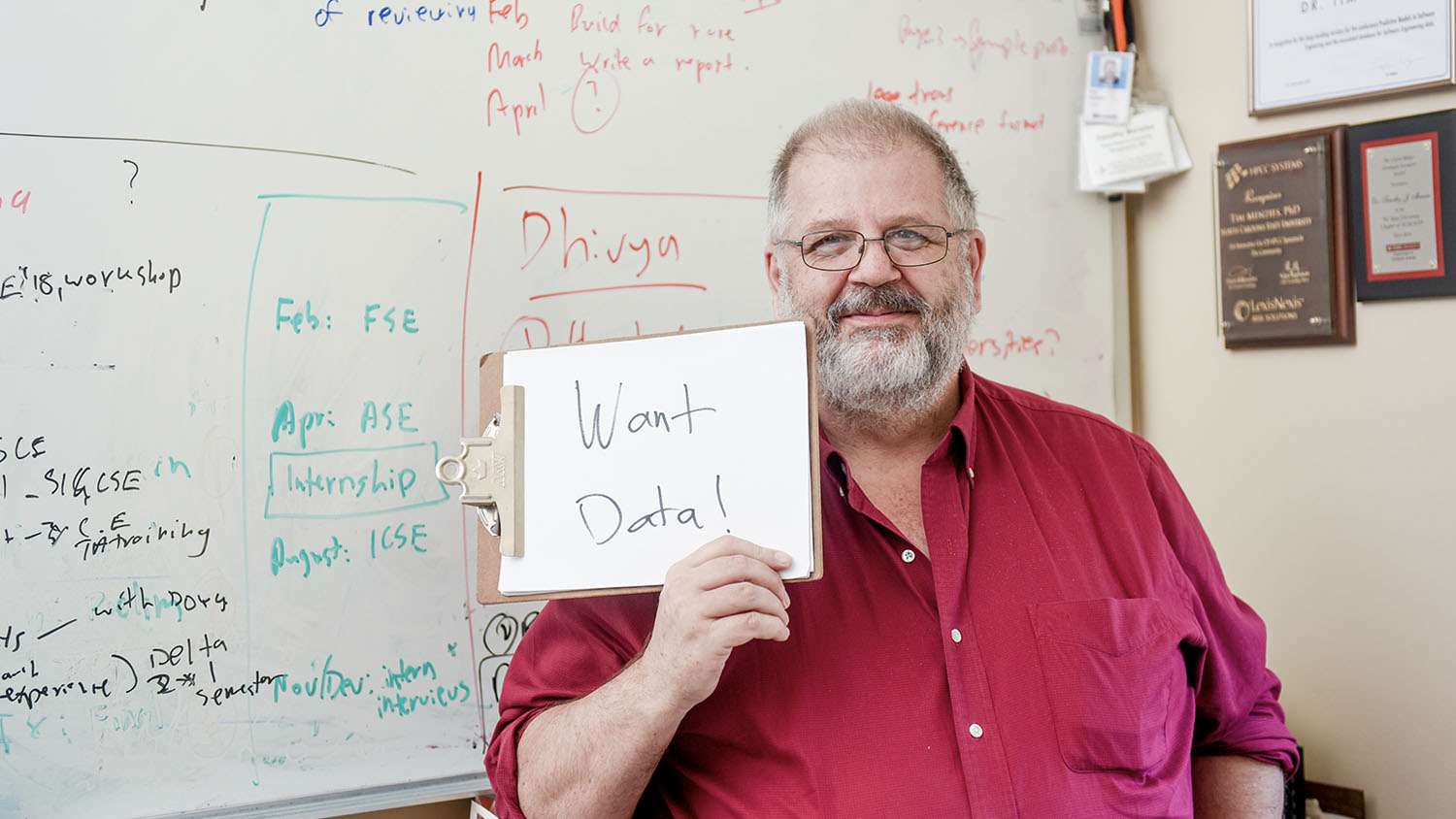
Distinguished University Professor in Security Sciences Laurie Williams and Professor Tim Menzies were inducted into the newly established academy, which honors individuals whose cumulative work has shaped modern software engineering research, practice and education.
Williams and Menzies have been leaders in the software engineering (SE) field for decades. Both are Fellows in the Institute of Electrical and Electronics Engineers (IEEE) and the Association for Computing Machinery (ACM).
“This is a well-deserved recognition for both Laurie and Tim,” said Department of Computer Science Head Daphne Yao. “Their visionary research and dedicated leadership have made a profound impact on the software engineering community worldwide, while inspiring generations of students here at NC State.”
Williams has established herself as a global authority on software security and agile software development. Her research sits at the intersection of software engineering and cybersecurity, focusing on proactive measures to build secure, resilient software systems.
“I am incredibly proud to be a member of this academy, among those icons I looked up to as a Ph.D. student,” Williams said.
Reflecting on her passion for the discipline, Williams noted the immediate real-world relevance of her work.
“I enjoy software engineering because I feel like I am having a practical impact on software development right now,” Williams said. “I work in software security, which sits at the intersection of software engineering and cybersecurity. I am passionate about protecting the world from cybercriminals, both through my research and by teaching students to develop secure systems.”
Menzies has been a pioneer in data-driven software engineering, advocating for evidence-based approaches to software analysis and lightweight, accessible artificial intelligence methods. His career spans landmark open-data initiatives, research frugality and extensive editorial leadership, including serving as Editor-in-Chief of Springer Nature’s Automated Software Engineering journal since 2022.
Menzies emphasized that this honor is due in large part to the collective work of his students over the years.
“Any award like this is really an award for a research group,” Menzies said. “I’ve had the good luck to work with graduate students who were smarter than me and unafraid to say so. My main contribution, I think, was buying the pizza then staying out of their way.”
Highlighting his research trajectory, Menzies pointed to three key accomplishments: advancing empirical rigor, promoting computational frugality and committing to professional service.
“I’ve been Editor-in-Chief of Springer Nature’s Automated Software Engineering journal since 2022, and I’ve spent a lot of years on program committees and review boards. It’s unglamorous work, but peer review is the immune system of a research field. Someone has to do it, and I’d rather it be done carefully.”
For Menzies, the dynamic nature of software engineering and its high real-world stakes are what keep the discipline exciting.
“Software engineering is the youngest of the engineering disciplines, and that’s the fun of it,” Menzies said. “In civil engineering, the arch was settled a long time ago. In our field, a graduate student with a laptop and a good question can still overturn something everyone thought was true. That happens in my lab regularly, and it never stops being a thrill.”
This thrill of pushing boundaries is precisely why software engineering demands both constant innovation and deep responsibility. Today, software is the invisible infrastructure powering our world, and navigating its rapid evolution requires leaders who don’t just keep pace — they shape it. Having two computer science faculty members recognized at the highest level is a testament to the transformative work being done at NC State CS, proving our university isn’t just following the future of the field, but actively guiding it.
“The stakes are real,” Menzies added. “Software now decides who gets a loan, how a plane lands, whether a hospital’s records come back after an outage. Anyone who builds it is doing something consequential, whether they realize it or not. Teaching students to take that seriously — to check their work, to distrust the beautiful result that hasn’t been tested — is the best job I can imagine.”
- Categories: