Trisha Gite: Bridging AI and Human Centered Technology
An interview with Fall 2025 #NCStateCS grad Trisha Gite
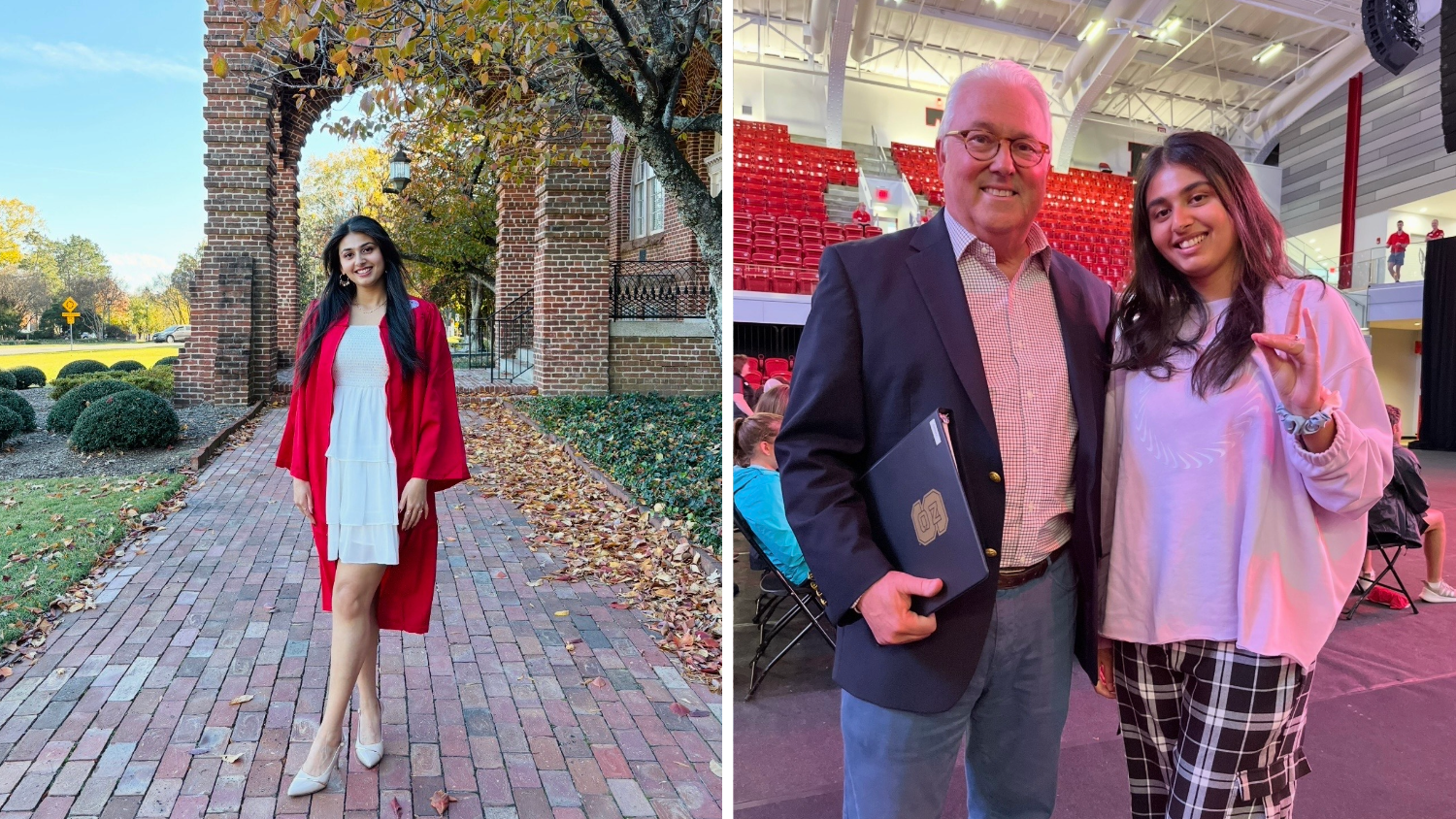
Tell us about your background. Where did you grow up? When did you realize you wanted to study CS?
I grew up in Greensboro, NC, a place that has shaped a lot of who I am. I spent my entire childhood and adolescence there, attending elementary, middle and high school in the same community. Greensboro was a close-knit and comforting environment, small enough to feel familiar, yet diverse enough to expose me to different cultures, ideas and people. Growing up there gave me a strong sense of stability and support, especially from my family, who played a huge role in encouraging my curiosity and creativity. Whether it was school projects, early attempts at building small apps, or doing taekwondo, I always felt like I had the space and encouragement to try things. That foundation influenced the way I approached both learning and technology later on.

I realized I wanted to study computer science, while also pursuing a minor in business administration, when my general love for creating things, especially apps, became much more personal as my grandfather was undergoing dialysis. Watching him struggle during that period, and seeing how much he depended on health technologies, made a deep impact on me. It was the first time I truly understood how meaningful and life-changing well-designed technology can be. I remember wishing there was something I could build to make his experience a little easier, and that hope slowly turned into a real sense of purpose.
That’s when I knew I wanted to pursue computer science, not just to write code, but to one day create tools that help people facing challenges like my grandfather did.
What drew you to NC State for your undergraduate degree?
I was drawn to NC State because of its strong reputation in computing and the emphasis it places on hands-on learning. I wanted an environment where I could explore research early, and NC State stood out for how accessible and diverse its undergraduate research opportunities were. I also appreciated the collaborative atmosphere on campus where students and faculty were genuinely supportive and willing to help each other succeed.

Overall, NC State felt like a place where I could challenge myself academically while also finding the guidance and resources to explore my long-term research goals. Though I applied to over ten colleges when deciding upon my undergraduate degree, NC State always felt like it was the right place for me, not just in terms or academics but a home where I will feel belonged and find friends that will eventually turn into family.
Is there anything that surprised you over your years at NC State?
One thing that truly surprised me during my years at NC State was how much I grew, not just academically, but personally. I learned that college isn’t just a place to master your major, it’s a place that pushes you into challenging situations that shape you in ways you never expect. Living away from home was tough at first, and introducing myself to professors or making new friends didn’t come naturally to me.
Academically, I struggled a lot in the beginning, I had a very hard time in physics and did terribly in my first computer science class. But those setbacks forced me to rethink how I studied and how I approached learning. Over time, I worked tirelessly to improve, and by my junior and senior years, I was earning straight A’s.
I also found confidence in building meaningful relationships on campus, to the point where I can now talk freely to my academic advisor and professors. Additionally, I was able to find my passion in research, and now I am contributing with professors from not just NC State but also the University of Florida, University of Illinois Chicago and more to conduct research in Artificial Intelligence and Human Centered Technology, while contributing to research papers that will get published. Adapting to these challenges showed me how far you can grow when you stay persistent, and it taught me that success in college is just as much about resilience as it is about academics. I will carry these lessons for my future endeavors of pursuing a masters and a doctorate degree.
Did you have a favorite class or area of study?
Yes, my favorite class was actually one I never planned on taking. My friend convinced me by saying, “Trisha, come on, this fits perfectly in our schedules, and we’ll get to work on real research with professors.” I was skeptical at first because I had no idea what research in computer science even looked like, and since it wasn’t a core class, I couldn’t understand why I should take it. Little did I know that this one decision would end up shaping my long-term passion.
Through the class, I joined a project called AI for Health, which aligned perfectly with the reason I chose NC State in the first place. We worked on designing AI-driven health technologies that were more efficient and truly user-centered, especially for supporting stroke risk patients. When the semester ended, I continued working with the same professor and the students in his research lab, becoming part of a team that inspired me every day. Today, I’m still actively proposing and contributing to research with multiple professors across different disciplines, collaborating with brilliant peers and continuing to explore the field that class first introduced me to.
What activities outside of your classes did you get involved in at NC State/in the Raleigh area, and why did you pursue those opportunities?
Outside of classes, I stayed deeply involved in activities that helped me grow both academically and personally. I spent a significant amount of time doing research, which became one of the most meaningful parts of my college experience. Research allowed me to develop skills and perspectives that a traditional course couldn’t offer, and it pushed me to think creatively and independently.

I also practiced taekwondo, attended hackathons and occasionally returned to my childhood hobby of creating artwork, which always helped me recharge. Beyond academics, some of my best memories came from spending time with friends such as trying new restaurants around Raleigh, going ice skating, playing badminton, foosball and just enjoying the experience of exploring new things together. Those moments made my time at NC State not only productive, but genuinely fun and fulfilling.
What advice would you give to other students considering attending NC State’s CS program?
One of the biggest pieces of advice I give to students considering NC State’s CS program is to not give up, even when it feels like the hardest thing you’ve ever done. There are moments when the workload feels overwhelming and quitting seems like the easier option, but pushing through those challenges opens doors you never expected and shapes you into the strongest version of yourself. You don’t need to be the best coder or a data structures expert to succeed here; NC State’s CS program is incredibly interdisciplinary, offering a wide range of concentrations and minors that allow you to find the path that fits you best.

I also highly encourage stepping outside your comfort zone, whether that’s trying new opportunities or meeting new people. You might discover a passion you never knew you had and build friendships that last a lifetime, just like I did.
What’s next for you?
After completing my bachelor’s degree, I plan to pursue a master’s in Human–Computer Interaction, with a strong focus on developing more human-centered AI systems. I’m particularly interested in creating systems that go beyond algorithmic efficiency and instead work in harmony with how people understand, interpret and interact with information.

My goal is to design technology that feels intuitive, supportive and is genuinely helpful to its users. Looking further ahead, I hope to continue this path by pursuing a doctoral degree in the same field and contributing to research that advances the future of human-centered AI.
How do you plan to celebrate your graduation?
For graduation, I plan on celebrating the CS Commencement with my family and friends followed by dinner. Additionally, I plan on spending my last weekend at NC State with the lifelong friends I have made here. Without these people, I would not have been able to get through this degree and survive college. My friends, along with my family’s support, have given me so much love and motivation to help me pursue this degree and achieve future endeavors without self doubt. Therefore, I believe celebrating with these special people is very important during graduation.
- Categories:


